When you get paid, the first transaction you make goes to savings. Not after bills. Not after spending. Not after you see what is left. First.
It is called "pay yourself first" because you are treating your future self as the first bill that gets paid, not the last one in line behind everyone else.
Why the order matters
Most people try to save what is left at the end of the month. Most months, nothing is left. The money goes to things that feel urgent in the moment, and savings gets pushed to next month, and next month the same thing happens.
Flipping the order removes the decision. The bitcoin moves the day you get paid. You spend what remains. There is no end-of-month negotiation with yourself about whether you can afford to save this time. The savings already happened.
How this works with bitcoin
Sent to a Piggy address, a feed costs a fraction of a cent and arrives in seconds. You can send ₿500 (well under a dollar) or ₿500,000 and the fee does not scale up with the amount.
This makes pay yourself first practical at any income level. With a bank, a $2 savings transfer is pointless after fees. To your Piggy, ₿1,000 moves for free. The infrastructure does not punish you for saving small amounts, so the habit works even when the amount is tiny.
Every Piggy has its own address, like name@pig.gy. When you get paid, you send bitcoin to it. That is the first transaction. Then you go on with your day.
If you are 14 and you get $20 for mowing a lawn, pay yourself first means a few of those dollars go into your Piggy before the rest can become a game or a pair of shoes. Buying bitcoin in the app is for adults, so hand that part to a parent and have them feed your Piggy from its page. Same rule, one extra step. If you are 24 and a paycheck arrives on Friday, pay yourself first means the transfer happens at 9am Friday, not Sunday night when the weekend has already cleaned out your account. The rule does not care about the amount. It cares about the order.
What keeps it there
Pay yourself first handles the moment money arrives. Piggy's death mechanic handles every moment after — keeping what you saved from leaking back out.
Bitcoin in a normal wallet is one tap away from being sent somewhere else. There is no difference between "savings" and "spending money" except a mental label you assigned, and mental labels break under pressure.
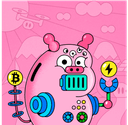
Piggy makes the label physical. Your bitcoin lives inside a creature with a name and a personality, and there is no send button. The only way it leaves is if you kill the Piggy and take all of it at once. That is a consequence a regular wallet does not have, and it is what keeps pay yourself first from quietly reversing itself over time.
Saving a little every week is the habit. Pay yourself first is the rule. Piggy is the place where both survive contact with real life.